Turf Installation Flaws - published guidance, explained without the sales pitch.
Artificial grass installation in North Las Vegas starts below the turf
Artificial turf in North Las Vegas is not just a roll of green material laid over dirt. The work that decides whether a yard drains, stays flat, and holds its seams is under the surface: caliche handling, aggregate base depth, compaction, edge restraint, irrigation capping, and a drainage route built for desert downpours. This guide is for homeowners in North Las Vegas, Las Vegas, and Boulder City who are comparing local installers before converting grass, rebuilding a dog area, adding a pool surround, or planning a low-maintenance front yard. This site is a matching service, not the installer, so use the guide to ask better questions when you talk with pros.
Step 1: Confirm the address, city, and water provider
Start with the property, not a generic Las Vegas Valley assumption. North Las Vegas retail water is provided by the City of North Las Vegas Utilities Department, with SNWA as the regional authority. North Las Vegas customers receive the SNWA Water Smart Landscapes base rebate only: $5.00 per square foot for the first 10,000 square feet and $2.50 per square foot after that.
That is different from Las Vegas Valley Water District customers, who can receive an additional $2 per square foot. Boulder City also receives the SNWA base rate only. If a proposal uses the wrong rebate figure for the address, slow down and ask the pro to verify the water provider before any grass is removed.
Step 2: Check the SNWA rebate conditions before demolition
The SNWA program requires a pre-conversion site visit, and grass must not be removed before that visit. Artificial turf is accepted only as a permeable substitute for mulch inside a qualifying conversion. The converted area still needs at least 50 percent living plant cover at maturity, and remaining irrigation must be drip with the required filter, pressure regulator, and low-flow emitters.
The minimum conversion is 400 square feet, the project has to be completed and inspected within 12 months of the pre-conversion inspection, and a permanent conservation easement is recorded on the property. Those rules affect design, timing, and whether a 100 percent synthetic yard makes sense for a rebate project.
Step 3: Decide what the yard has to do
Common North Las Vegas projects include front yard conversions, backyard dog and play areas, pool surrounds, HOA-approved front yard replacements, low-maintenance retirement yards, and new-build landscaping packages. Each has a different failure point. A dog area needs odor control and drainage. A pool edge needs clean transitions. A front yard needs a design that can pass HOA review.
Las Vegas projects may include rental-property turnover or older lots. Boulder City projects may involve older housing stock, retirement yards, and visible front-yard changes in historic areas. A good installer should ask what the yard is for before recommending turf grade, pile height, infill, or base depth.
Step 4: Measure the real usable area
North Las Vegas ZIPs verified in the local facts file include 89030, 89031, 89032, 89081, 89084, 89085, and 89086, but ZIPs do not settle everything. The pro should confirm the address, measure the actual yard, mark access points, and note planters, curves, pool equipment, patios, gates, and existing rock or concrete.
The facts file does not verify a typical residential lot size or typical turf-project size for this market. That means a quote should not rely on a local average. It should be based on the measured square footage, roll layout, waste, access, haul-off, and the exact base assembly proposed for the site.
Step 5: Handle HOA review before materials are ordered
HOA prevalence is high in North Las Vegas master-planned and HOA-governed communities, including Aliante, Valley Vista, and Craig Ranch. Nevada law stops an association from banning drought-tolerant landscaping, including artificial turf, but it can still require architectural review and reasonable material standards.
Ask what the installer can provide for an HOA submittal: turf sample information, pile height, color, infill type, edge detail, plant coverage if the rebate is involved, and a simple layout. HOA revision time is one of the verified cost factors, so it belongs in the schedule.
Step 6: Excavate for caliche and desert hardpan
The local soil note identifies caliche, a cemented calcium-carbonate hardpan over alkaline desert soil that can range from crumbly to rock-hard and drain poorly. If turf is laid over unprepared hardpan, water can sit where it should move, and the base can shift or telegraph low spots through the surface.
A North Las Vegas quote should state whether hardpan will be broken, excavated, bridged, or hauled off. That choice affects labor, disposal, base depth, geotextile use, and the final drainage path. It is one of the most important differences between a local installation plan and a generic turf pitch.
Step 7: Build drainage for monsoon bursts
The verified climate normal used in the facts file shows 4.18 inches of precipitation per year, but the local problem list still calls out monsoon-season drainage and flash flooding. Low annual rainfall does not mean a flat base is acceptable. The yard still needs a place for water to go when a storm hits quickly.
The installer should explain how the finished grade moves water away from the home, patios, and low spots. Where caliche blocks downward movement, the plan may need a deeper aggregate build, separation layer, or a designed route across the yard. Ask for the drainage path in plain language.
Step 8: Compact the aggregate base in layers
The sub-base carries daily foot traffic, furniture, dogs, children, and poolside use. It should be clean, angular, compactable material placed in lifts and compacted until firm. A loose or shallow base can show later as dips, puddles, wrinkles, soft edges, or raised seams.
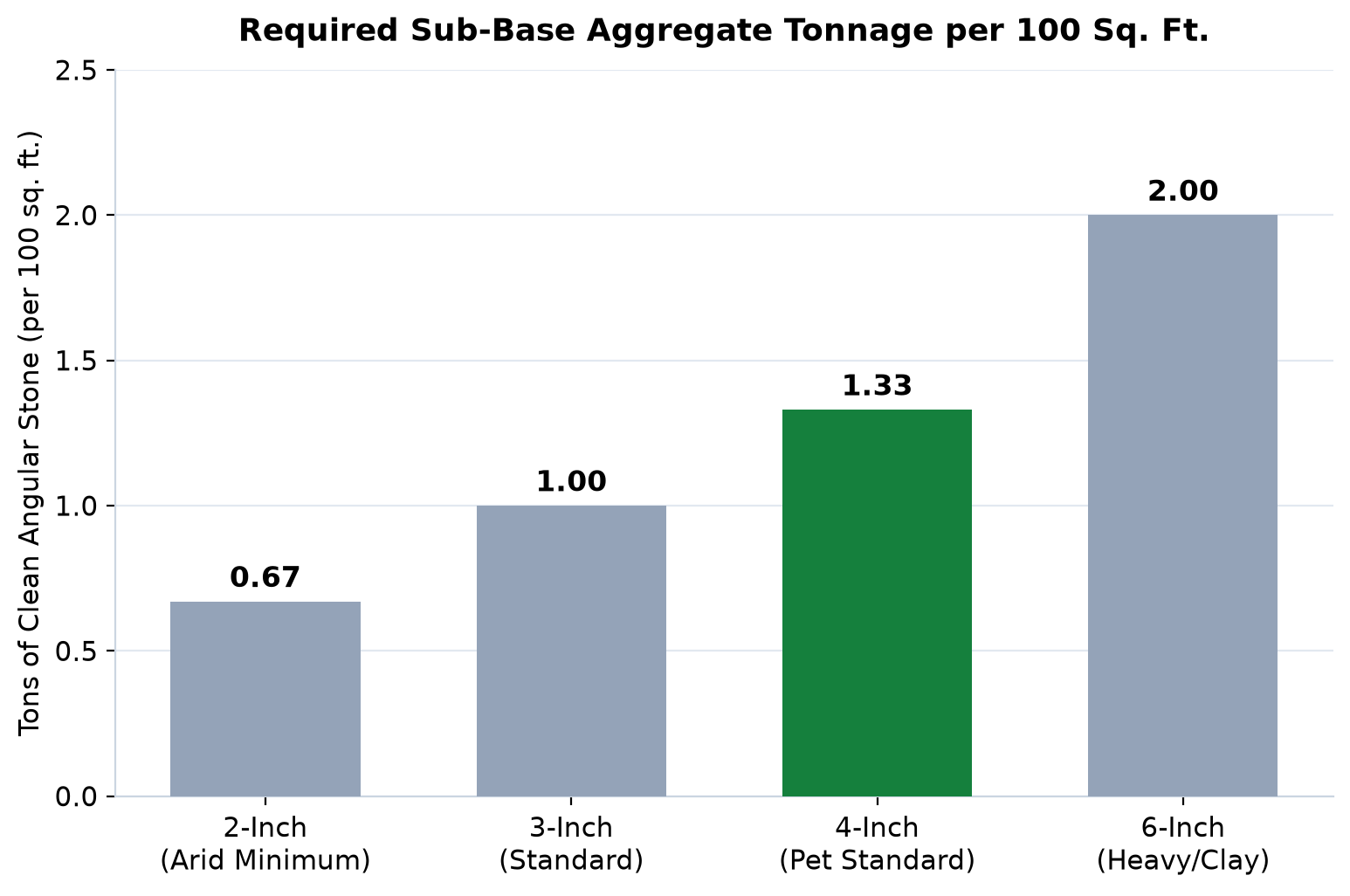
The right base depth depends on use, drainage, caliche depth, access, and whether a geotextile separation layer is required. Dog runs, play areas, and pool surrounds usually need a more careful explanation than a narrow decorative strip.
Step 9: Plan seams around heat, traffic, and sightlines
July normal daily maximums average 104.5F at the NOAA station used in the facts file, and turf surfaces can run far hotter. Summer heat affects backing relaxation, adhesive timing, seam movement, infill work, and how long crews can work safely in the afternoon.
Turf rolls should run in a consistent pile direction, and seams should be kept away from the hardest traffic and the most visible viewing angle when the layout allows it. Ask how the installer handles heat expansion and seam movement in June, July, and August.
Step 10: Secure edges and choose infill by use
Edges should hold the base and turf backing in place around patios, pool decks, planters, dog areas, and walkways. The quote should name the edge restraint method, not just say the turf will be installed. Wind-blown dust and debris are also verified local issues, so clean staging matters during base and seam work.
Infill should match the yard. Pet turf needs odor and drainage discussion. Pool surrounds need comfort and stable edges. Front yards may focus more on appearance and HOA material standards. There is no verified one-size-fits-all infill in the facts file, so be cautious with universal claims.
Step 11: Know what permits were verified
No artificial-turf or residential landscaping permit appears in the City of North Las Vegas published permit-type list, and no city ordinance requiring one for private-yard synthetic turf was found in the verified file. The file does say grading, right-of-way work, and retaining walls over 24 inches need permits.
That distinction matters. A basic turf conversion is not the same as a project that changes grade near the right-of-way, adds retaining walls, or packages screening work with the yard. Confirm the specific address with the Permit Application Center before work starts.
Step 12: Compare written scopes, not promises
A useful North Las Vegas turf scope should cover demolition, haul-off, caliche handling, base depth, compaction, drainage, geotextile if used, turf product, pile direction, seam method, infill, edge restraint, irrigation capping, utility locating, HOA support, cleanup, and any permit triggers. Cost should be tied to those factors rather than presented as a guaranteed number.
If you are ready to compare bids, look for pros who can explain North Las Vegas conditions without drifting into generic sales language. The best proposal will make the base, drainage, heat, HOA, and water-rule issues clear before asking you to choose a grass sample.