North Las Vegas Turf Base Engineering: The Specs That Matter Under Caliche
In North Las Vegas, the base is not a generic turf detail. It is the part of the job that has to deal with cemented caliche, alkaline desert soil, monsoon drainage, wind-blown debris during installation, and July normal daily maximums of 104.5F. A yard in Aliante or Valley Vista can look simple from the street, but the ground below may be hardpan that drains poorly and moves water the wrong way unless the installer breaks it, bridges it, or builds over it correctly.
The Layer Stack Starts With North Las Vegas Soil
The first engineering decision is not turf color. It is how the pro handles the native ground: caliche and desert hardpan over alkaline soil. The City of North Las Vegas sits across older core neighborhoods, HOA-heavy master plans, and newer subdivision work, so the quote should explain what happens after grass, rock, or concrete is removed and before any synthetic surface is rolled out.
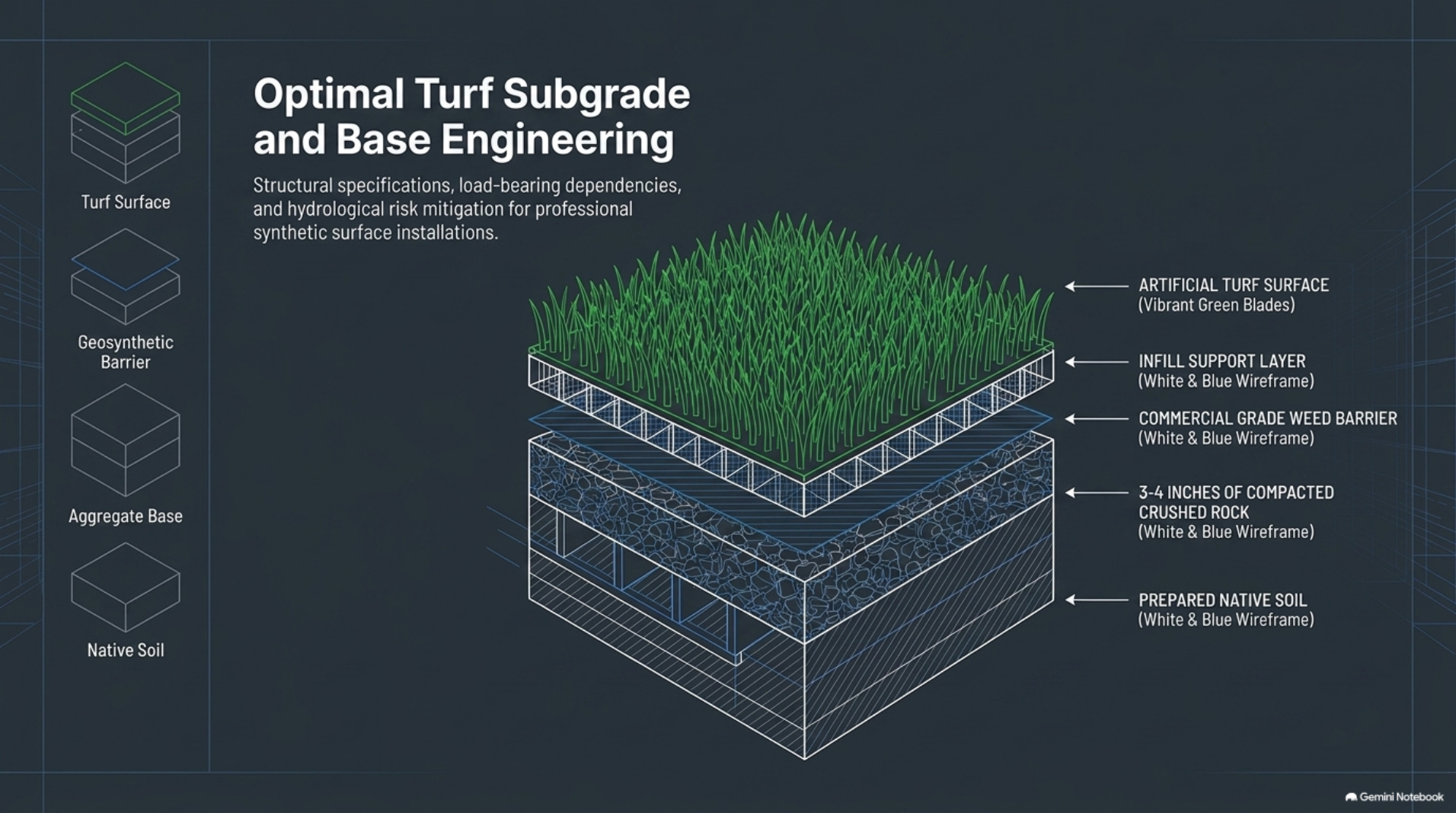
That conversation should include drainage base depth, whether a geotextile separation layer is required, and how the crew keeps fines from migrating into the base. It should also include site access: rear-yard gates, side yards, equipment reach, and haul-off all change how much base work can be done efficiently. If the answer is only “we level it and lay turf,” the local part of the engineering discussion has not happened.
The Grade Vector: Monsoon Water Needs a Planned Exit
North Las Vegas averages 4.18 inches of precipitation across the year, but the design problem is not gentle annual rainfall. The local risk is monsoon-season drainage and flash flooding on ground that already drains poorly. A turf quote should show where stormwater goes during a sudden downpour, not just how the lawn looks on a dry day.
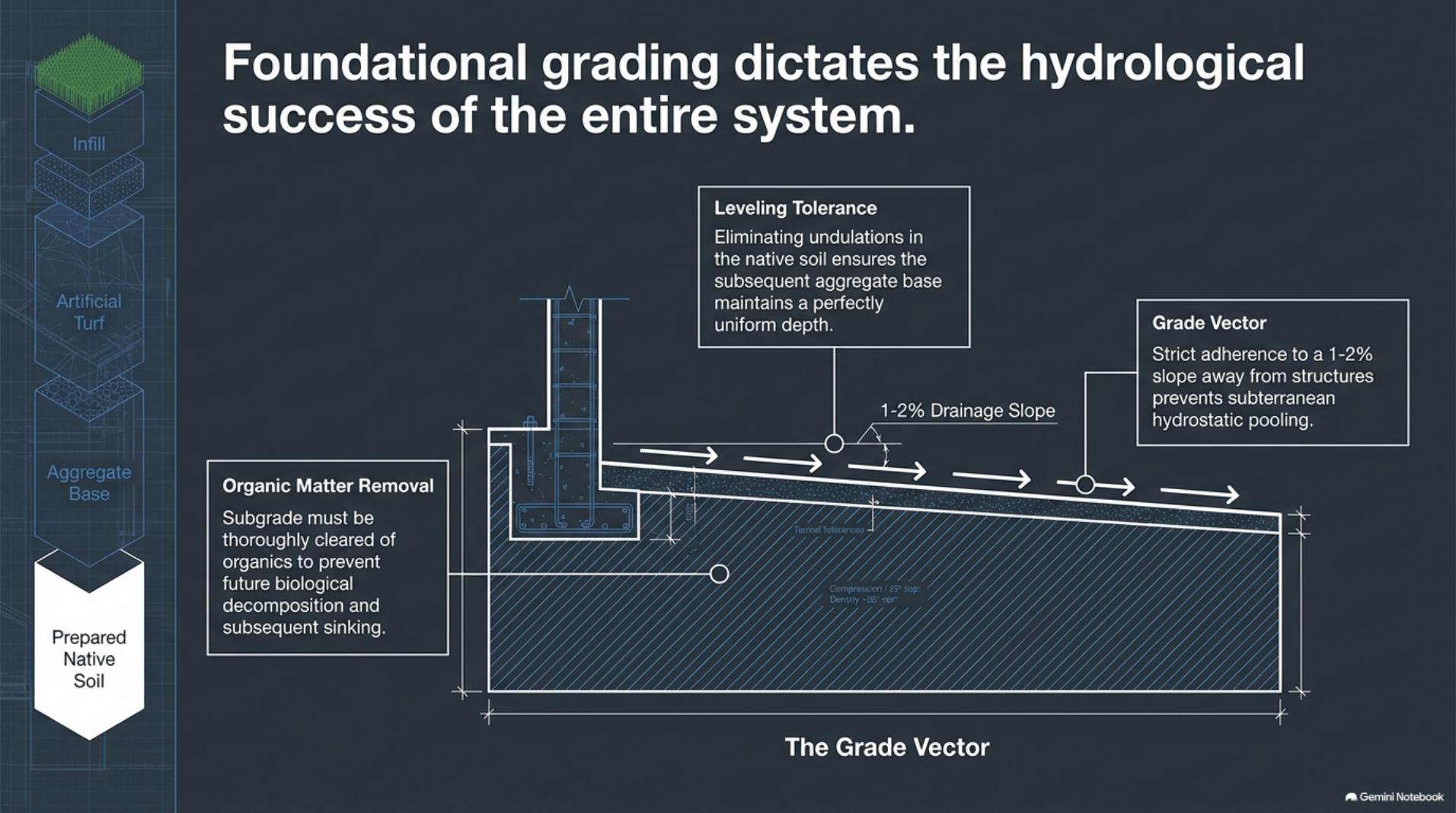
The safest interview question is plain: point to the exit path. Does water move toward a safe low point, a drainable landscape area, or an existing flow line, and does it stay away from patios, block walls, and the house? In neighborhoods such as Craig Ranch, Aliante, and Valley Vista, the answer may also need to fit an HOA submittal, because the association can require architectural review even though Nevada law protects drought-tolerant landscaping that includes artificial turf.
Compaction Is Not a Buzzword When the Ground Is Hardpan
Caliche creates a trap for cheap work: it feels solid, so a careless installer may treat it like a ready-made base. The problem is that hardpan can be close to impermeable. Water can sit above it, dust can contaminate the bedding layer, and summer heat can drive expansion and seam movement. The proposal should tell you whether the hardpan will be broken, bridged, excavated, or left alone, and why that choice fits your yard.
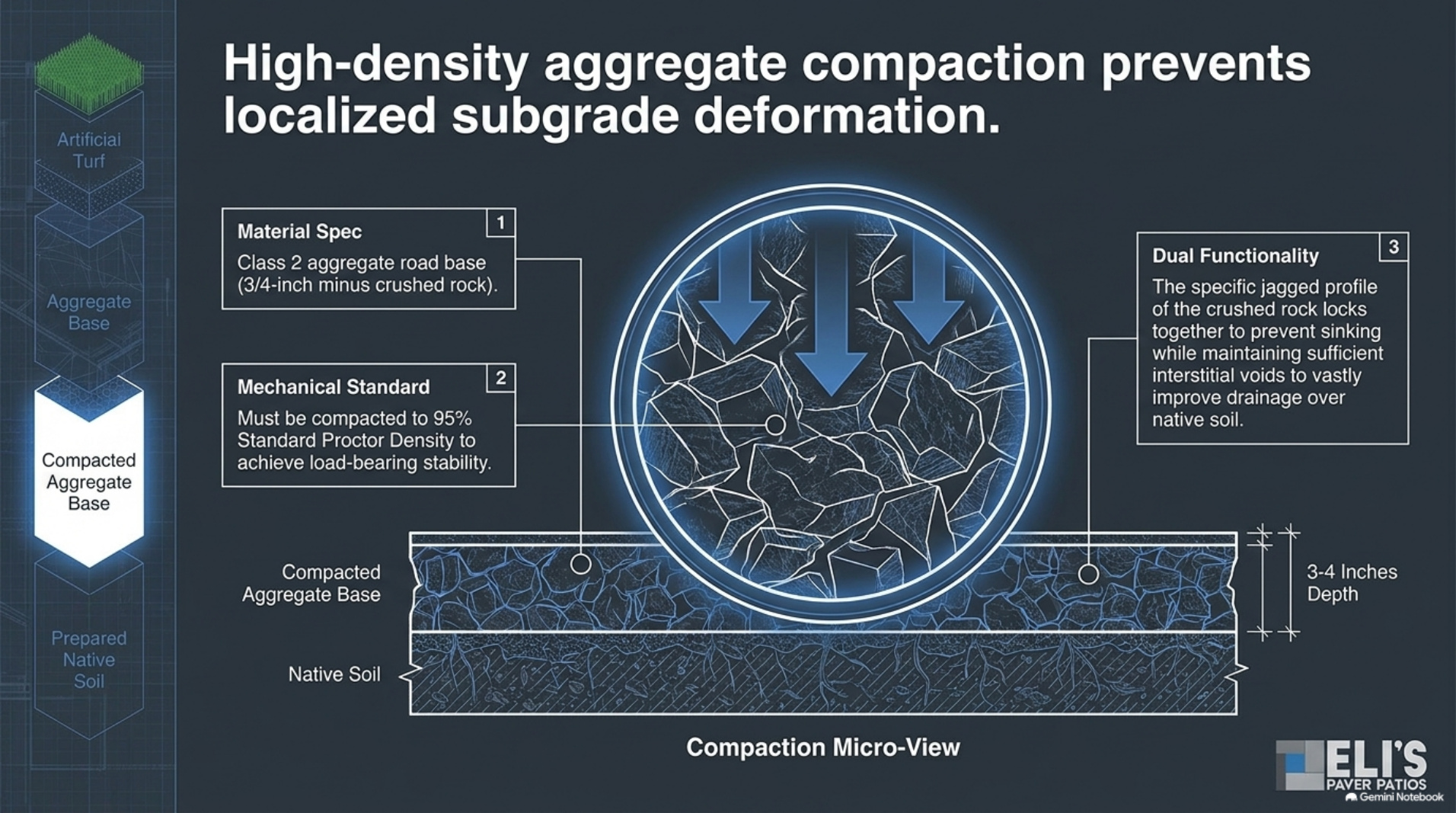
This is also where cost factors become real. Depth of caliche excavation, disposal, edge restraint, turf grade, infill type, and whether the project needs a separation layer can change the work. A matching service can connect you with local pros, but the written quote should still explain the base method in ordinary language before you compare numbers.
Geotextile, Infill, and Dust Control Have Local Jobs
A separation layer is not decoration. In North Las Vegas it may keep alkaline soil, caliche fines, and wind-blown debris from mixing into the drainage base. The installer should be able to say where fabric belongs, why it is used on that address, and how the base will still move water during the first heavy summer storm.
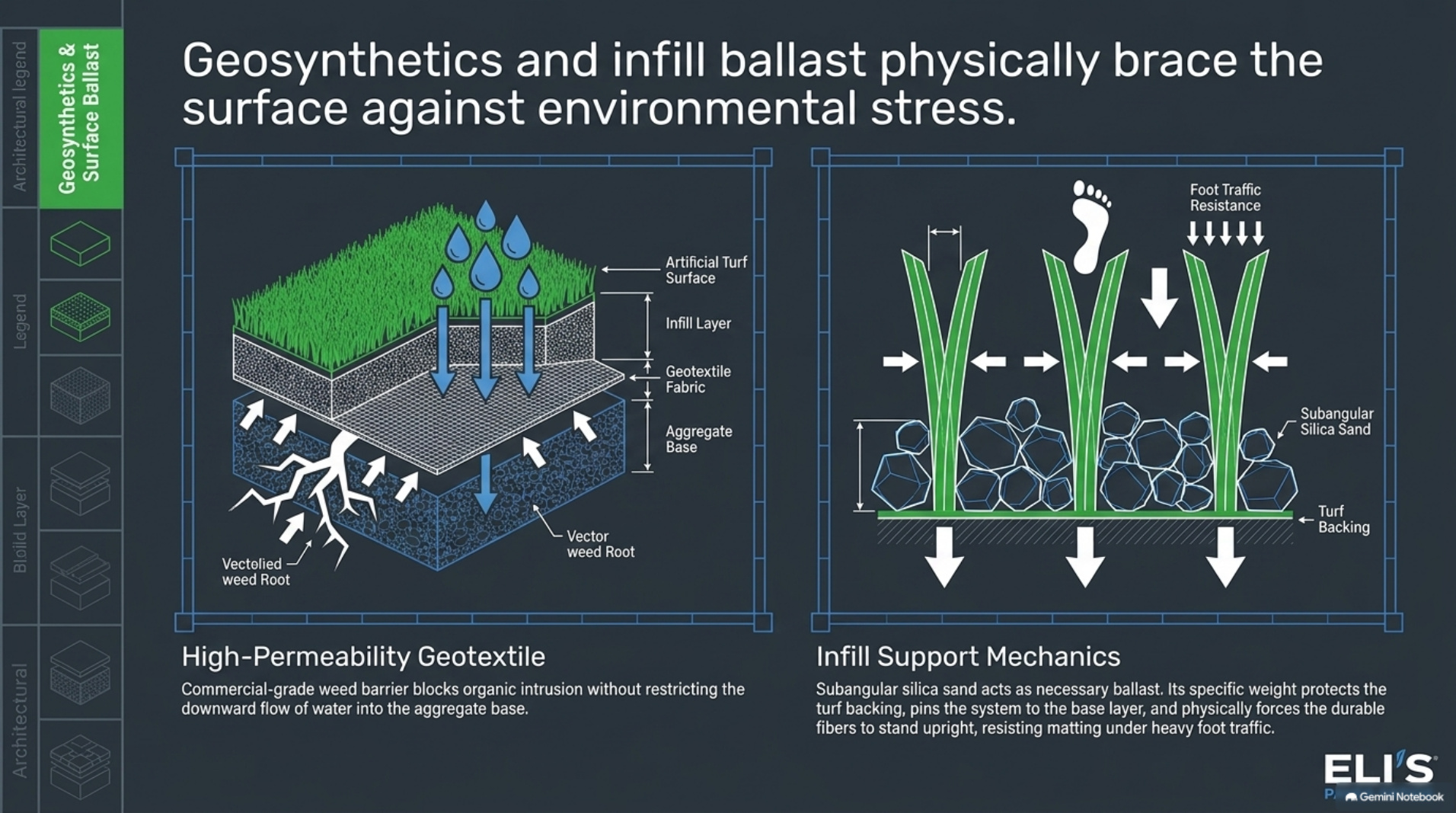
Infill has the same local test. It helps ballast the surface during heat expansion, supports fibers under backyard use, and affects how pet and play areas feel after a day in intense UV. No one should promise a guaranteed cooling outcome or lifespan. They should explain the product choice, the maintenance expectations, and the tradeoffs for a yard used by dogs, kids, patio furniture, or pool traffic.
The Diagnostic Comparison: What to Ask Before You Approve the Job
Use the base discussion as a diagnostic table. If a proposal does not mention caliche, monsoon drainage, site access, and HOA review where applicable, it is not a North Las Vegas proposal yet. If it does, compare how each pro handles the same risks.
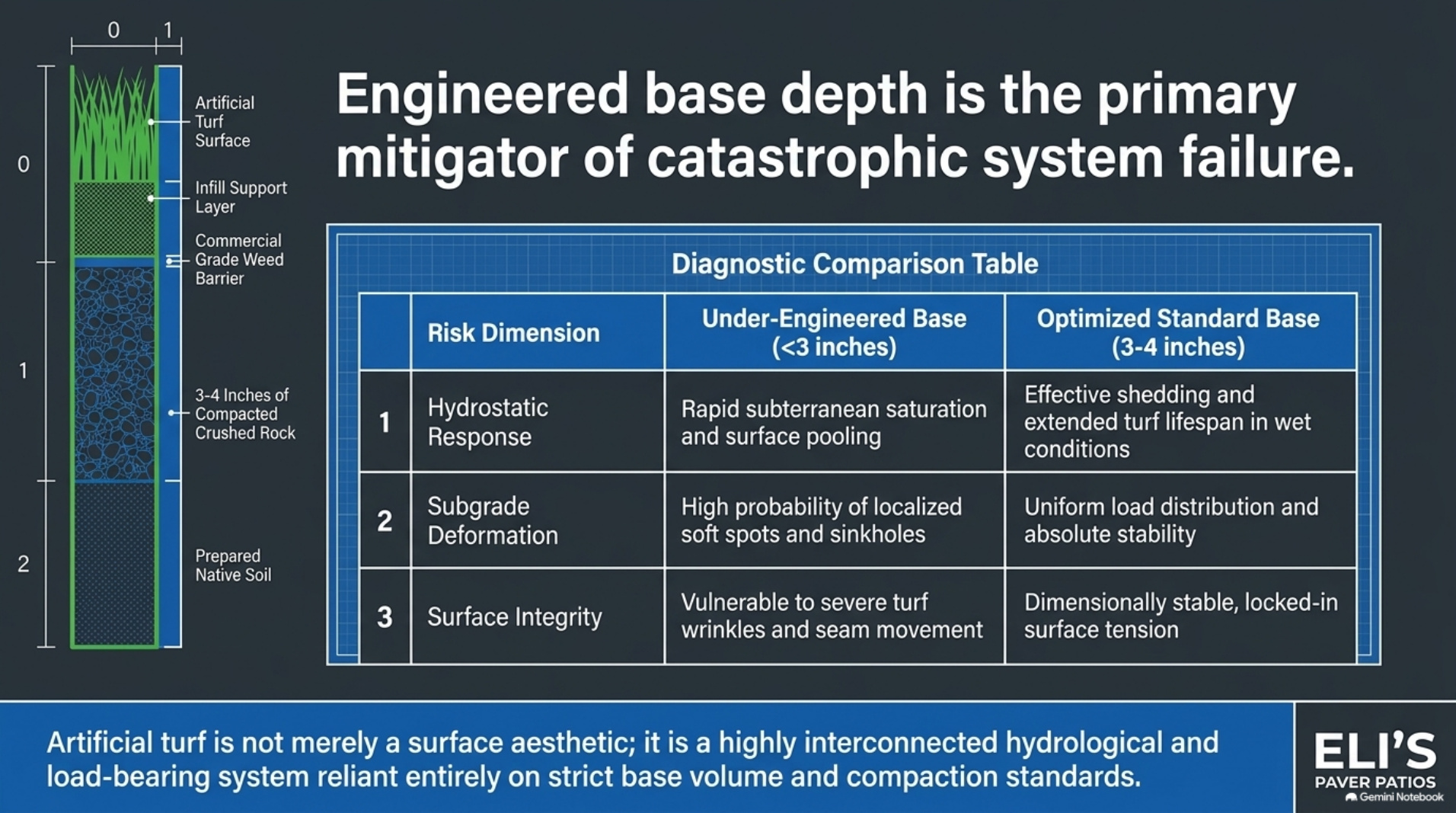
| North Las Vegas Risk | Weak Proposal | Better Proposal |
|---|---|---|
| Caliche / hardpan | Treats native ground as ready to cover | Explains whether the hardpan is broken, bridged, excavated, or separated |
| Monsoon drainage | Talks only about the surface looking level | Shows the runoff path and keeps water away from structures |
| HOA review | Ignores Aliante, Valley Vista, or Craig Ranch submittal rules | Provides material notes that can support architectural review |
Permits are a separate check. No artificial-turf or residential landscaping permit appeared in the city’s published permit-type list when the facts were compiled, but grading, right-of-way work, and retaining walls over 24 inches can require permits. Confirm the address-specific scope with the City of North Las Vegas Permit Application Center before work starts.
If the project is part of a Water Smart Landscapes conversion, remember the North Las Vegas rate is the SNWA base rate only: $5.00 per square foot for the first 10,000 square feet and $2.50 after that. Artificial turf can be used only as a permeable substitute for mulch inside an otherwise qualifying conversion, with the required living-plant coverage and pre-conversion site visit.
Want a base plan built for North Las Vegas soil?
Tell us about your yard and we can connect you with local turf pros who know how to quote caliche, drainage, HOA review, and rebate-sensitive conversions — free, no obligation.
Get Free Matches