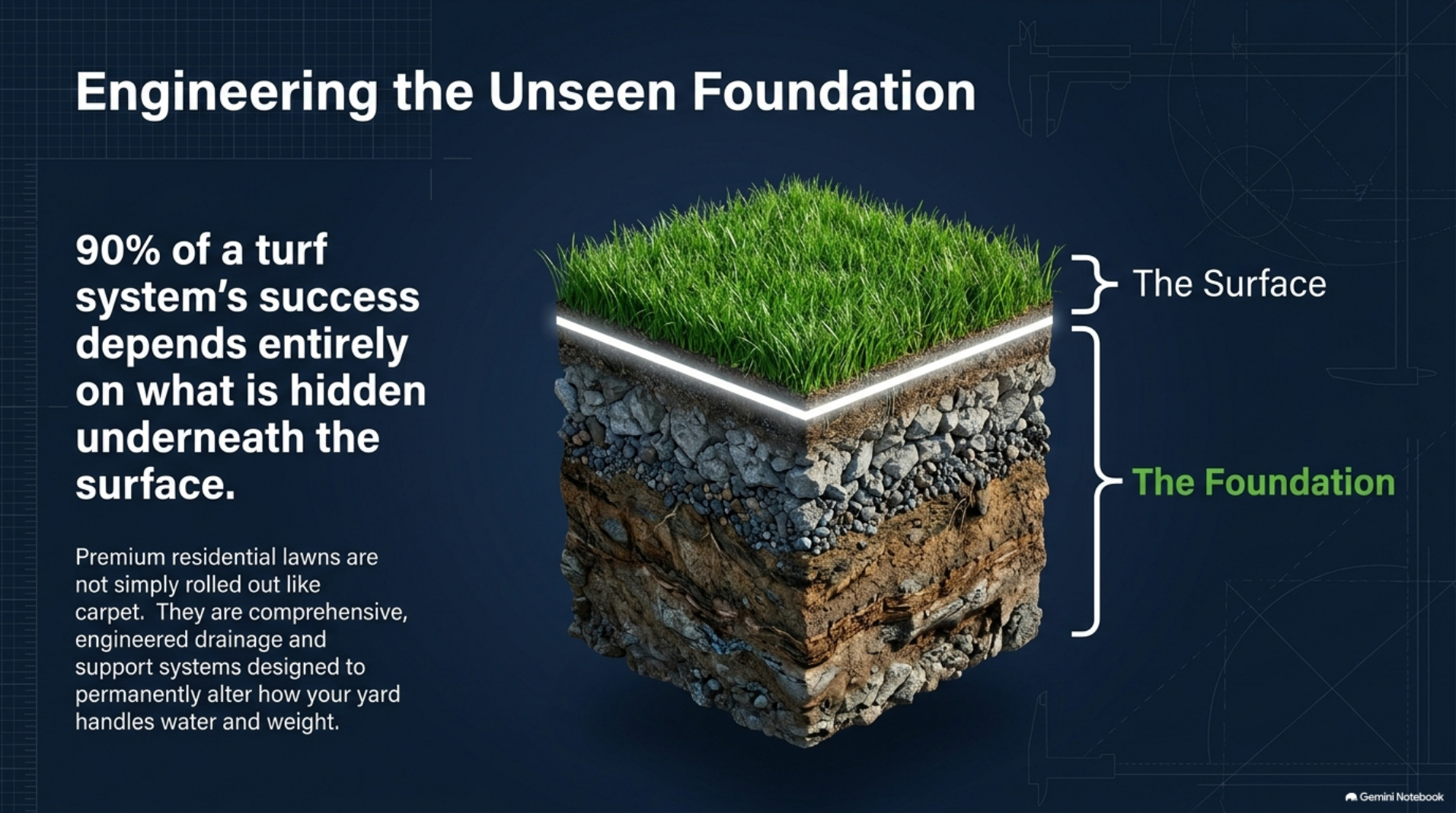
A North Las Vegas turf lawn fails from the bottom first. The visible grass may look fine on day one, but the hidden foundation has to work through caliche, alkaline hardpan, wind-blown dust, monsoon runoff, intense UV, and summer days with a July normal daily maximum of 104.5F. That is why the smartest homeowner questions are about digging, drainage, separation, and HOA review before anyone talks about blade color.
Turf Disasters Hidden Danger - published guidance, explained without the sales pitch.
Look Below the Turf Before You Compare Quotes
The first question is what the pro expects to find under your yard. North Las Vegas is not a soft-soil market. The verified local layer describes caliche and desert hardpan as cemented calcium-carbonate layers over alkaline desert soils, ranging from crumbly to rock-hard and draining poorly. A quote that does not name that condition is not yet specific to the city.

The Hidden Work Is Where Local Risk Gets Removed
North Las Vegas projects commonly involve front yard conversions, backyard play areas, dog runs, pool surrounds, HOA-approved front yard replacements, and new-build landscaping packages. Those uses are different, but each one depends on the same buried decisions: whether existing grass, rock, or concrete is removed correctly; whether the hardpan has to be broken, bridged, or hauled off; and whether the base is separated from soil that can contaminate drainage.
A North Las Vegas Foundation Has to Drain Storm Bursts
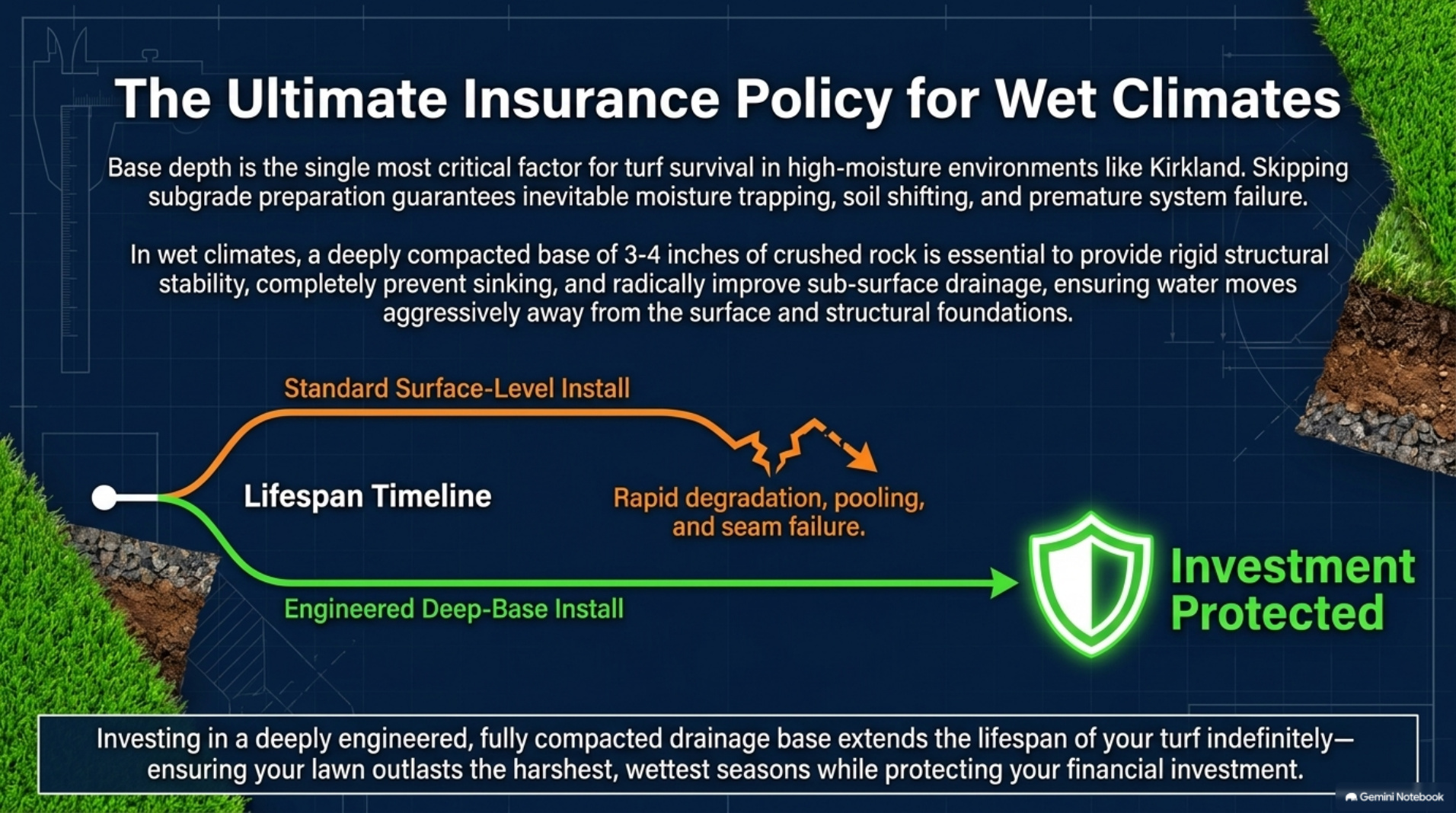
The city’s annual precipitation normal is 4.18 inches, but that number can mislead homeowners. The installation problem is monsoon-season drainage and flash flooding, not steady rainfall. A base that seems acceptable in dry weather can still trap water when a fast storm hits hardpan and has nowhere to go.
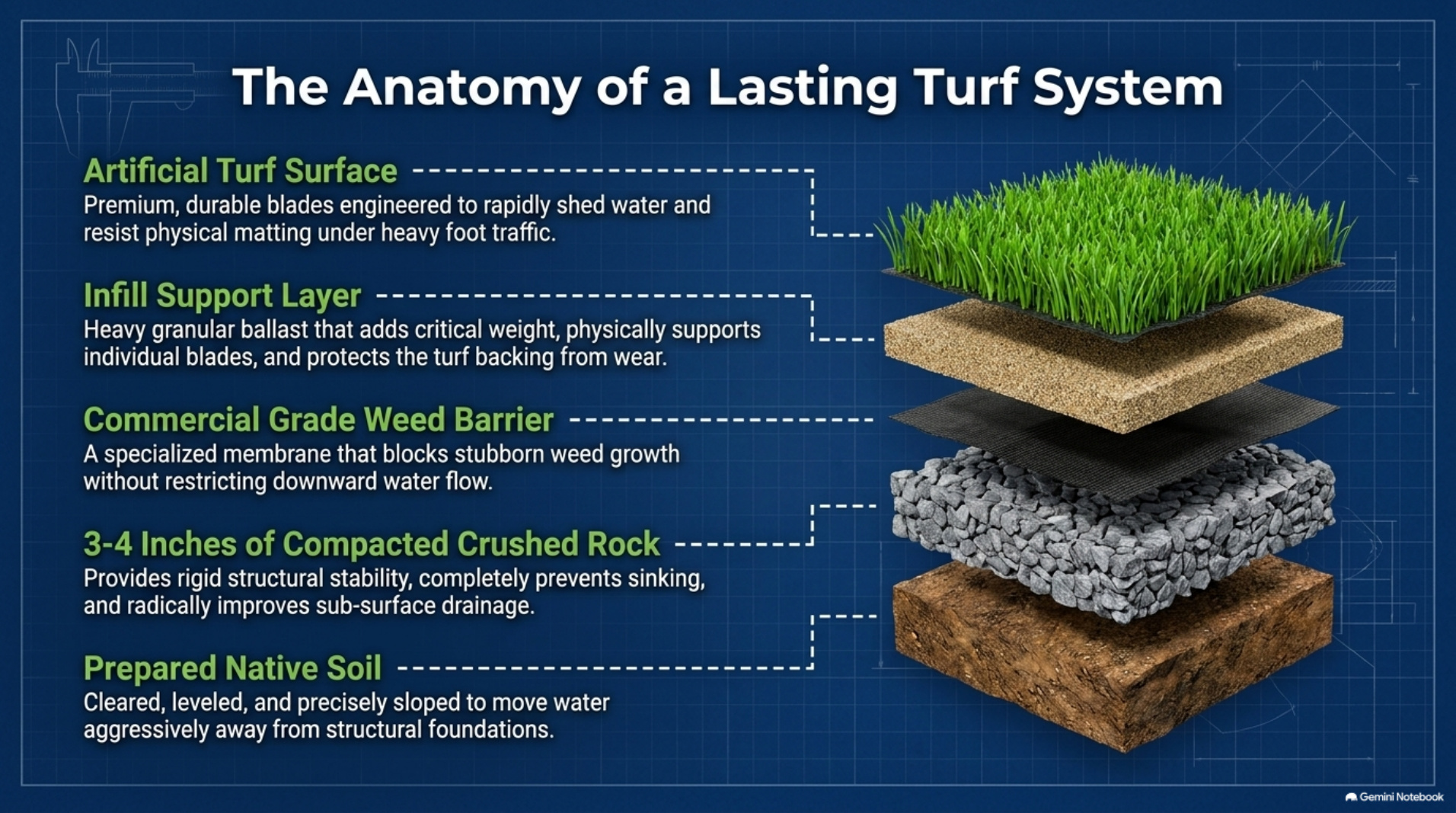
Ask the pro to describe the exit path in the actual yard: away from the house, away from the patio edge, away from a block wall that can hold water, and away from any low spot that already collects runoff. If the yard is in an HOA community such as Aliante, Valley Vista, or Craig Ranch, the plan may also need to be clear enough for architectural review.
Cheap Foundations Fail Where Heat, Dogs, and Hardpan Meet
The local failure pattern is easy to picture: a dog run over poorly draining ground, a summer afternoon that bakes trapped moisture, and seams that move when heat expansion is not controlled. The verified service notes for North Las Vegas call out fading and fiber degradation from intense UV, heat expansion and seam movement in summer, caliche that must be broken or bridged before base goes down, drainage design for monsoon downpours, wind-blown debris during installation, and HOA review requirements.
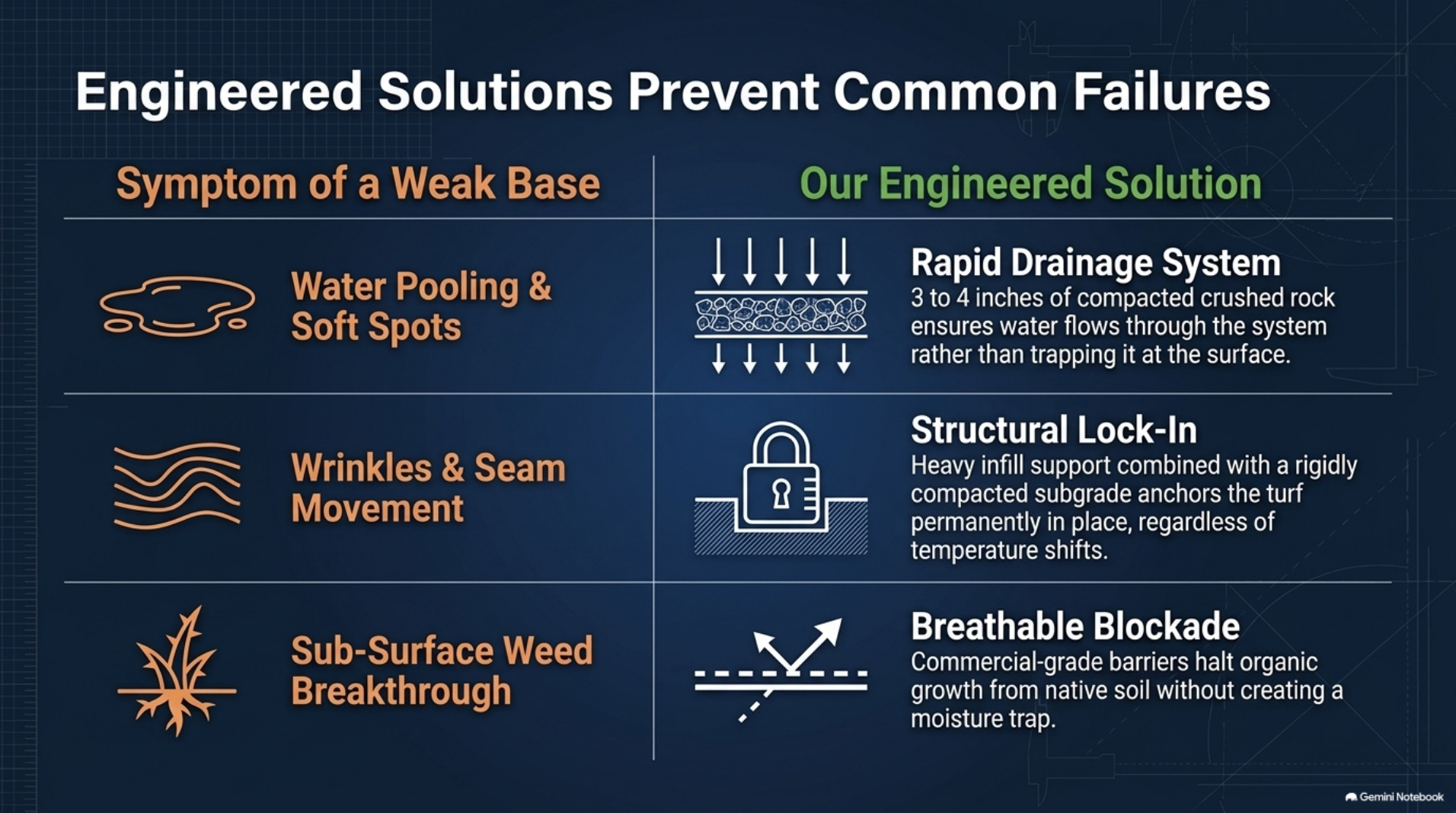
That does not mean every yard needs the same build. A front yard conversion, a pool surround, a dog run, and a low-maintenance retirement yard each put stress on the base in a different way. The estimate should connect the foundation choice to the use of the yard, not hand you a generic turf package.
The Base Is Also a Rebate and Permit Conversation
If the project is tied to the SNWA Water Smart Landscapes program, North Las Vegas gets the base SNWA rate only: $5.00 per square foot for the first 10,000 square feet and $2.50 per square foot after that. Do not use the Las Vegas Valley Water District top-up for this city. Artificial turf is accepted only as a permeable substitute for mulch inside a qualifying conversion that still meets the living-plant and drip-irrigation conditions, and the pre-conversion site visit comes before grass removal.
Permits are not something to guess. The verified local layer found no artificial-turf or residential landscaping permit in the city’s published permit-type list, but grading, earthwork in the right-of-way, and retaining walls over 24 inches can trigger permits. The safer move is to confirm the address-specific scope with the City of North Las Vegas Permit Application Center before work starts.
Want help finding a pro who talks about the base first?
Tell us about your North Las Vegas yard and we can connect you with local turf pros who understand caliche, HOA review, SNWA base-rate conversions, and monsoon drainage — free, no obligation.
Get Free Matches